Joe Cronin: Portland's quiet leveragist
Cronin's strategic ambiguity enabled the Lillard trade win but created communication gaps that constrained his effectiveness. His patient asset accumulation now hinges on whether Henderson confirms as a cornerstone.
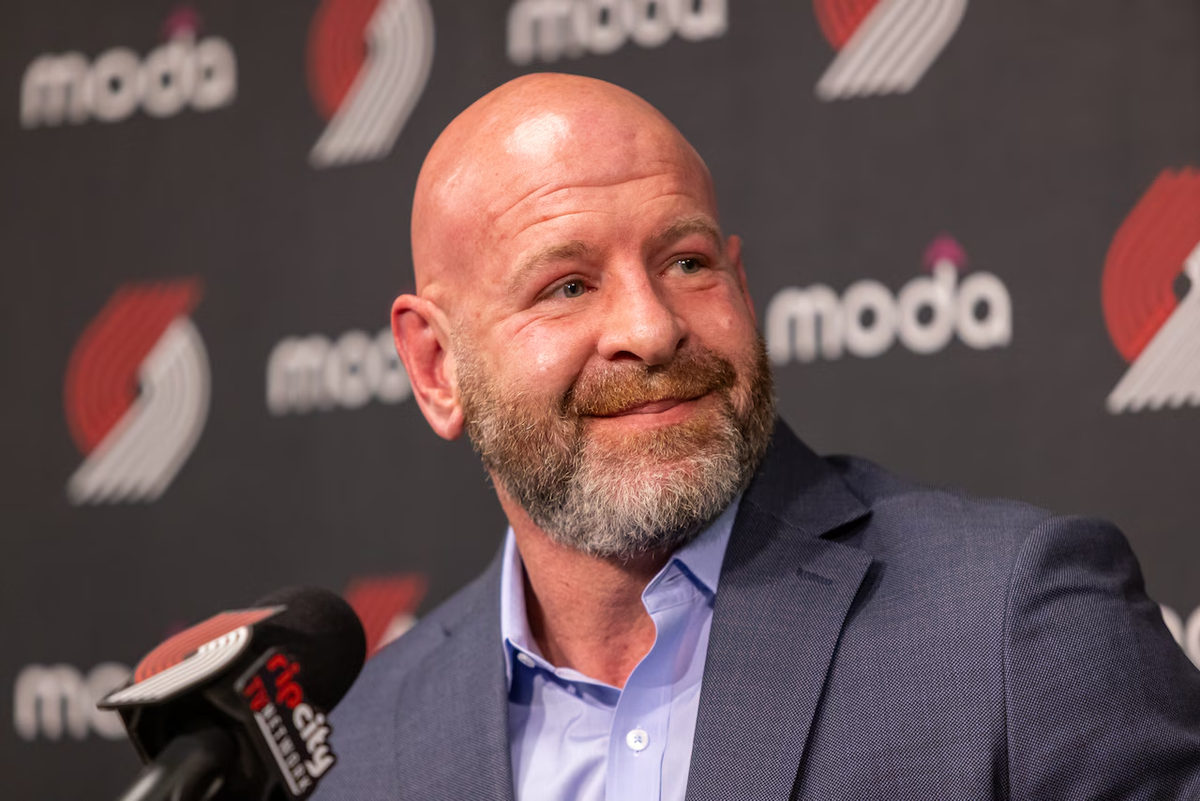
Joe Cronin inherited a franchise star demanding a title window, executed a teardown while publicly avoiding rebuild language, and now faces the test of whether his patient asset accumulation can produce more than a respectable post-Lillard ceiling. The central tension of his tenure is performing one phase publicly while executing another privately, with the final judgment dependent on whether strategic ambiguity was necessary leverage management or costly miscommunication.
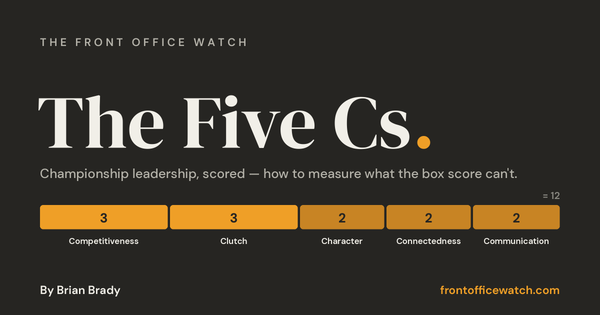
The Scorecard
| Phase Diagnosis | 5/10 |
| Asset Extraction | 7/10 |
| Cornerstone ID [unresolved] | 5/10 |
| Assembly Discipline | 6/10 |
| Execution Under Pressure | 8/10 |
| Overall | 6.2/10 |
Decision authority: Committee/In Flux (Dec 2021–May 2022) → System GM (May 2022–June 2023) → Committee/In Flux (July–Sept 2023) → System GM trending Sole Architect (Oct 2023–Apr 2025) → Committee/In Flux (May 2025–present)
Cronin scores highest on execution under pressure, anchored by his refusal to capitulate during the Damian Lillard trade saga, but his phase diagnosis remains compromised by recurring gaps between public messaging and private strategy. The overall grade reflects competent transaction work constrained by communication failures that may have been tactically necessary but were strategically costly.
Who He Replaced — And Why
Cronin replaced Neil Olshey, who had served as Portland's general manager since 2012 and president of basketball operations since 2015 before being terminated on December 3, 2021, after an independent investigation found code-of-conduct violations. The Trail Blazers cited "concerns and complaints around our workplace environment at the practice facility," with Yahoo Sports and The Athletic reporting allegations of a toxic workplace, intimidation, and profanity-laced tirades, though the underlying investigative report was never made public.
Cronin inherited an organizational mess wrapped around a basketball dilemma. Portland finished 27-55 in 2021-22 with Damian Lillard limited to 29 games due to abdominal surgery, sitting 13th in the Western Conference while carrying expensive veteran contracts that pushed them into luxury tax territory. At Cronin's February 2022 trade deadline, the Blazers were 21-31 with significant injury problems, facing the fundamental question of whether to reset, retool, or rebuild around their franchise star.
The cap context was equally pressing. Portland's repeater tax clock and luxury tax burden meant that any roster moves had to account for both basketball and financial reality. Cronin later revealed that getting out of the luxury tax and resetting the repeater clock was a primary goal of his first wave of moves, indicating he understood the financial constraints even as he publicly resisted rebuild language. He became permanent GM on May 10, 2022, after what the organization described as a search process, though no widely reported external finalists emerged during his interim tenure.
The Phase Analysis
Portland entered Cronin's tenure in Reset, masked by public retool rhetoric. The organization had missed the playoffs in 2021, Lillard was injured and would undergo surgery, and the veteran core had proven unable to advance beyond the first round consistently. Yet Cronin told NBA.com in February 2022 that Portland was "too competitive" to tear it down and didn't "have the appetite" for a full reset, even as he moved Norman Powell, Robert Covington, C.J. McCollum, and Larry Nance Jr. within weeks.
The summer 2022 phase claim is where the framework forces the hardest question. Driven by Lillard's two-year supermax extension and ownership's directive to build a winner, Cronin acquired Jerami Grant, extended Anfernee Simons and Jusuf Nurkic, and added Gary Payton II. The framework's verdict: this was an attempt to leap from Reset directly to Calibrate without earning the right. The cornerstone was confirmed in Lillard, but the supporting cast was nowhere close to a roster with a diagnosable structural problem preventing a title — it was a 27-55 team. A true Calibrate move requires the cast to already be there. What Cronin actually executed was the false-construction trap the framework warns against: paying Calibrate prices on an Assemble foundation, with the additional confusion that the cornerstone himself was 32 and on borrowed prime years. The phase lasted roughly one year, from July 2022 through the June 2023 draft, when the selection of Scoot Henderson with the No. 3 pick effectively ended any credible title-window narrative.
The return to Reset began with Henderson's selection and accelerated with Lillard's July 2023 trade request. By this point, Cronin's moves and words had finally aligned — he completed the Lillard trade in September 2023, guided Portland to a 21-61 record in 2023-24, and began using explicit "talent acquisition mode" language around the 2024 draft. The Assemble phase commenced in 2024-25 with the Deni Avdija trade, Donovan Clingan selection, and contract extensions for Shaedon Sharpe and Toumani Camara — but the cornerstone diagnostic remains the open question, with Henderson's status unresolved by the framework's standard of locked in, available, and with sufficient prime years remaining.
The current phase transition is unresolved. New owner Tom Dundon's April 2026 statement that Portland was "shifting away from development mindset" toward winning coincided with a 42-40 playoff season under interim coach Tiago Splitter, but the roster still carries Assemble-phase uncertainties around Henderson's development, veteran contract management, and whether the cast is being built around the right cornerstone.
The Marquee Decision
The Damian Lillard trade negotiation defines Cronin's tenure and reputation. When Lillard requested a trade on July 1, 2023, with a stated preference for Miami, Cronin faced the classic leverage dilemma: satisfy the franchise icon's wishes or maximize organizational return while risking a public relations disaster.
Cronin chose confrontation over appeasement. "Patience is critical," he told Sports Illustrated's Chris Mannix. "If this takes months, it takes months." When asked about his approach, Cronin was explicit about his priorities: "How can we maximize this return?" The NBA eventually warned Lillard's representation about the Miami-only posture, while Cronin maintained his position through a summer of public pressure and media criticism.
The leverage test intensified when Lillard reportedly considered rescinding his trade request and returning to Portland. Cronin rejected the possibility, telling Trail Blazers media in October 2023: "I personally thought it was a bad idea. The trade request had not been rescinded." That decision — choosing clean transition over relationship repair — revealed Cronin's willingness to prioritize organizational clarity over individual relationships, even with the franchise's greatest player.
The final trade vindicated Cronin's patience: Portland received Jrue Holiday, Deandre Ayton, Toumani Camara, a 2029 Milwaukee first-round pick, and Milwaukee swap rights in 2028 and 2030. Holiday was quickly flipped to Boston for Malcolm Brogdon, Robert Williams III, and two additional first-round picks. Sports Business Journal later reported that Jody Allen instructed Cronin to "remove emotion and ego" from the process, suggesting ownership supported the leverage-first approach that defined the summer.
The Metric-by-Metric Read
Phase Diagnosis: 5/10. Cronin's moves consistently matched Reset and Assemble logic, but his public messaging lagged behind his private strategy by 12-18 months in multiple instances. The February 2022 trades functioned as a teardown while he publicly rejected "tear it all the way down" language. The June 2023 Henderson pick signaled franchise transition while he maintained "zero desire" to trade Lillard. The summer 2022 Lillard-supermax-driven push tried to perform Calibrate on what was structurally still a Reset roster — the kind of phase-skip attempt the framework grades harshly. The pattern suggests tactical communication management rather than genuine misdiagnosis on the back end, but the repeated word-action gaps and the one genuine phase-skip attempt created organizational confusion that constrained his effectiveness.
Asset Extraction: 7/10. The Lillard trade anchors Cronin's strongest metric, demonstrating patience under pressure and market-beating returns through the Holiday flip and Milwaukee pick upside. The Avdija acquisition — trading Brogdon, the No. 14 pick, a future first, and seconds for a breakout wing on a value contract — has aged as an "enormous victory" in Sam Quinn's assessment. The 2022 salary dump moves were weaker, particularly Powell/Covington returning minimal basketball value, but they achieved the stated cap-management goals that enabled later flexibility.
Cornerstone Identification: 5/10 [unresolved]. Sharpe represents Cronin's clearest draft success, taken seventh without college game experience and later extended for four years and $90 million after establishing himself as a core wing. Henderson remains the central uncertainty — drafted third overall with "transcendent" potential according to Cronin, but still showing inconsistency and role questions entering his third season. By the framework's diagnostic standard — locked in, available, sufficient prime years remaining, primary engine on a playoff series win — Henderson has not yet been confirmed. Avdija and Camara may ultimately define this metric more than the lottery picks, as both were acquired through transaction skill rather than draft position and fit Portland's defensive identity.
Assembly Discipline: 6/10. Cronin preserved major draft capital through the Lillard trade tree and avoided mortgaging future flexibility for short-term appeasement, but Portland's veteran salary accumulation creates cap-sheet concerns entering the next phase. Grant's expensive contract, Holiday's large deal, and Lillard's return complicate roster building around the young core. The 2022 attempt to skip phases — paying Calibrate prices in what was structurally Reset — is the clearest discipline failure of his tenure, though it was constrained by Lillard's contract leverage. ESPN's July 2025 assessment that Portland seemed like "a team trying to execute multiple strategies at once" captures the discipline questions that persist despite generally sound individual moves.
Execution Under Pressure: 8/10. The Lillard negotiation provides definitive evidence of leverage management under maximum organizational and media pressure. Cronin held his position for months, ignored public criticism, and extracted superior value by refusing the Miami-only destination. The 2025-26 season added different pressure through Chauncey Billups's arrest, new ownership expectations, and cost-cutting controversies, with Cronin accepting accountability while defending organizational decisions. His willingness to close the door on Lillard's potential return shows decisive execution when relationship management conflicted with strategic clarity.
The Unresolved Question
Henderson's development trajectory will determine whether Cronin's cornerstone identification merits vindication or criticism. If the No. 3 pick becomes a high-end starting guard who can serve as the primary engine in playoff series, the 2023 decision to keep him over trading for veteran help can be defended despite the Lillard relationship cost. If Henderson plateaus as a rotation player, the pick becomes a franchise-altering missed opportunity that compromised both present and future. His injury history, shooting consistency, and leadership development remain genuine questions entering year three.
The broader unresolved question is whether Cronin's asset accumulation can produce a real Calibrate-phase team or merely respectable competence. The Avdija-Sharpe-Camara-Clingan core shows promise, but Portland's veteran salary commitments and new ownership pressure to win create a narrow window for consolidating assets around the young foundation. The framework's harshest question for Cronin: is the Assemble work happening right now being built around a confirmed cornerstone, or around the wrong cornerstone with no fallback plan? Henderson's next two seasons will answer it.
The Bottom Line
Cronin emerges as a competent asset manager whose greatest strength is leverage discipline under pressure and whose greatest weakness is phase communication that repeatedly lagged behind his actual strategy. The Lillard trade negotiation revealed a GM willing to endure public criticism for organizational benefit, while the subsequent rebuild work shows systematic talent evaluation through the draft and trade markets.
The 2025-26 playoff appearance under interim coach Tiago Splitter and new owner Tom Dundon's win-now messaging create the next test of Cronin's tenure. After four years of building draft capital and young talent, Portland must now prove the patient approach can produce a real Assemble-to-Calibrate progression rather than cyclical mediocrity. Cronin's extension signals organizational confidence, but Dundon's stated shift away from development suggests less patience for the Assemble timeline.
The verdict on Cronin ultimately depends on Henderson's ceiling and Portland's ability to navigate the transition from Reset to genuine title relevance without sacrificing the flexibility that enabled their recovery from the Lillard era. His transaction discipline and pressure management provide a foundation, but the phase clarity issues that defined his early tenure — and the unresolved cornerstone question — must be answered before Portland can credibly enter Calibrate. Damian Lillard's post-departure assessment captures the central tension: "Toward the end, it was a lot of misunderstandings and miscommunications." Whether those miscommunications were tactically necessary or strategically damaging remains the defining question of Cronin's Portland tenure.
The full sourced research behind this profile, including phase-by-phase move analysis, direct quotes, and citations.